Styling Tips for Streetwear Hauls and Accessories
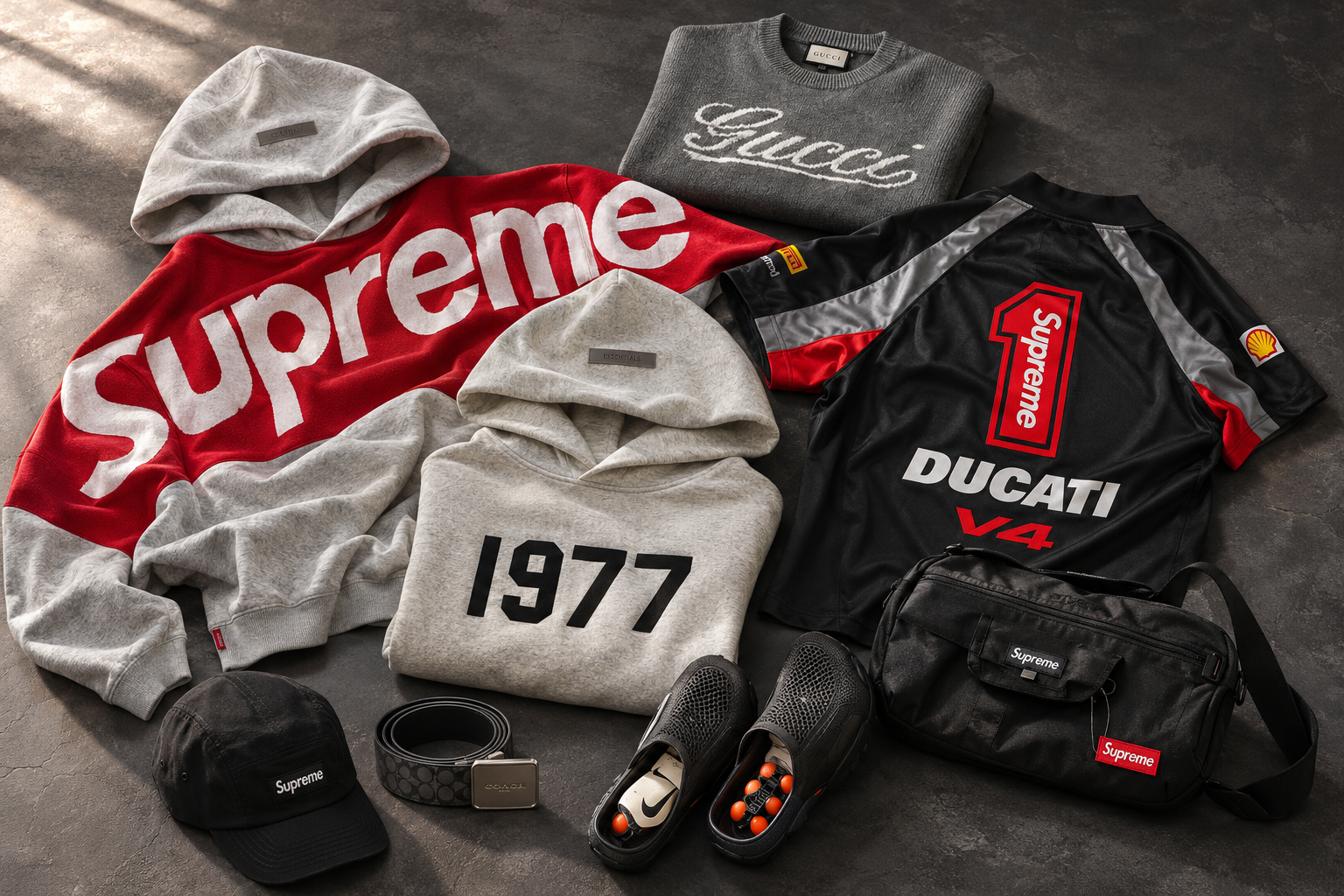
Reading the overall color scheme from a flat lay This flat lay uses black, white, and gray as a base, with striking red and a few bright patterns added to create a clear visual hierarchy. The red hoodie, black racing-style top, and red logos become the main focal points, while the gray hoodie, knitwear, and off-white pieces help
Editor score 4.2 / 5
Reading contents
Reading the overall color scheme from a flat lay

This flat lay uses black, white, and gray as a base, with striking red and a few bright patterns added to create a clear visual hierarchy. The red hoodie, black racing-style top, and red logos become the main focal points, while the gray hoodie, knitwear, and off-white pieces help soften the overall contrast. Black shoes, hats, bags, and belts are concentrated at the bottom of the frame, keeping the display stable and letting the colorful clothing stand out.
If you want to achieve an easy-to-control street style, start by determining a main color and then use black, white, and gray to support it. When red is the main color, pair it with black bottoms or accessories to strengthen the silhouette; if you want a softer look, choose a gray hoodie, off-white knitwear, or light-colored hat as a visual buffer.
Layering combinations among tops
The gray "1977" hoodie in the image works well as a simple base layer; black or dark bottoms can highlight the number print on the chest. The gray crewneck knit with large white text is suitable for pairing with black pants, black shoes, or a dark bag, making the white text the highlight of the upper body.
The red hoodie with large text already has a strong presence, so other items should have fewer complex patterns. You can use a black hat, black bag, and dark shoes to tie the color scheme together, or add white or light gray as an inner layer to keep the red from dominating the visual center.
The black racing-style top features red and silver color blocking and a prominent graphic area, suitable for pairing with solid basics. If worn with floral print shorts, it is recommended to keep other accessories black to avoid the pattern, red, and silver competing for attention.
The off-white half-zip cable knit sweater has a high collar, zipper, and vertical texture, and is best set off by black or dark gray pieces. Its light tone can reduce the heaviness of a dark outfit and also works well with a gray hoodie for a low-contrast layered look.
Managing patterns and colors
When an outfit includes large text prints, racing-style graphics, and floral shorts at the same time, you can use the "one main pattern, one supporting pattern" approach:
- Let a large-print top carry the main visual focus, with bottoms in a solid color or low-contrast style.
- If the shorts already have a rich floral pattern, choose a black, white, or gray top and minimize other attention-grabbing logos.
- Red is best used in one or two key spots, such as the hoodie body, bag logo, or sock details, avoiding even distribution across the entire outfit.
- A white short-sleeve tee with a number can serve as a brightening layer; when paired with a black jacket or dark bottoms, the "99" on the chest will stand out more clearly.
Coordinating accessories and footwear
The black hats, bags, belts, and slides displayed at the bottom form a unified set of dark accessories. This combination pairs well with red or gray tops because the accessories won't steal attention from the main clothing while making the overall look feel more complete.
Black slides displayed with socks directly showcase a casual approach. If there are already red elements in the clothing, choose socks with red details to echo them; to reduce overall tension, switch to gray, white, or black socks. Hats and bags also work well in the same color family, allowing the patterned clothing to remain the focal point.
How to make a flat lay clear
This image arranges clothing at a diagonal with shoes, belts, hats, and bags placed at the bottom. The advantage is a rich variety of items and an intuitive display of color relationships. To recreate a similar layout, follow this order:
- First lay out the largest pieces—hoodies, jackets, or knits—to set the main color of the frame.
- Place a second large piece at an angle to create directional change, but don't completely cover the main print.
- Place smaller items like T-shirts and shorts in the middle or on the sides to connect different colors.
- Concentrate shoes, hats, bags, and belts at the edges or bottom to provide a visual finishing touch.
- Leave some wrinkles and natural overlaps to add depth, but keep key text, collars, pockets, and main patterns visible.
What to focus on when choosing combinations
When judging combinations from the image, the most important things to note are color distribution, pattern size, collar and cuff structure, and whether accessories repeat the same color family. Some items in the image overlap, and certain sleeves and hems are not fully spread out, so it is better for assessing visual combinations and display effects, and cannot be used to determine fit, size, fabric composition, or actual performance.
If you plan to choose similar pieces, pay attention to complete front, side, and detail shots, especially print edges, paneling, pocket structure, sole outlines, and knit texture. This will help you more accurately judge whether they fit into the same color scheme.