Fall/Winter Streetwear Flatlay: Color & Styling Review
Start with the Overall Color Palette This flatlay uses black, gray, white, and off-white as its foundation, with a burgundy hooded jacket serving as the visual centerpiece. The contrast between the cool base and warm focal point creates balance. A black sweatshirt, quilted jacket, pants, and baseball cap anchor the overall palette, while the gray knitwear, turtleneck, and light gray crewneck preserve dimension within the darker combination. 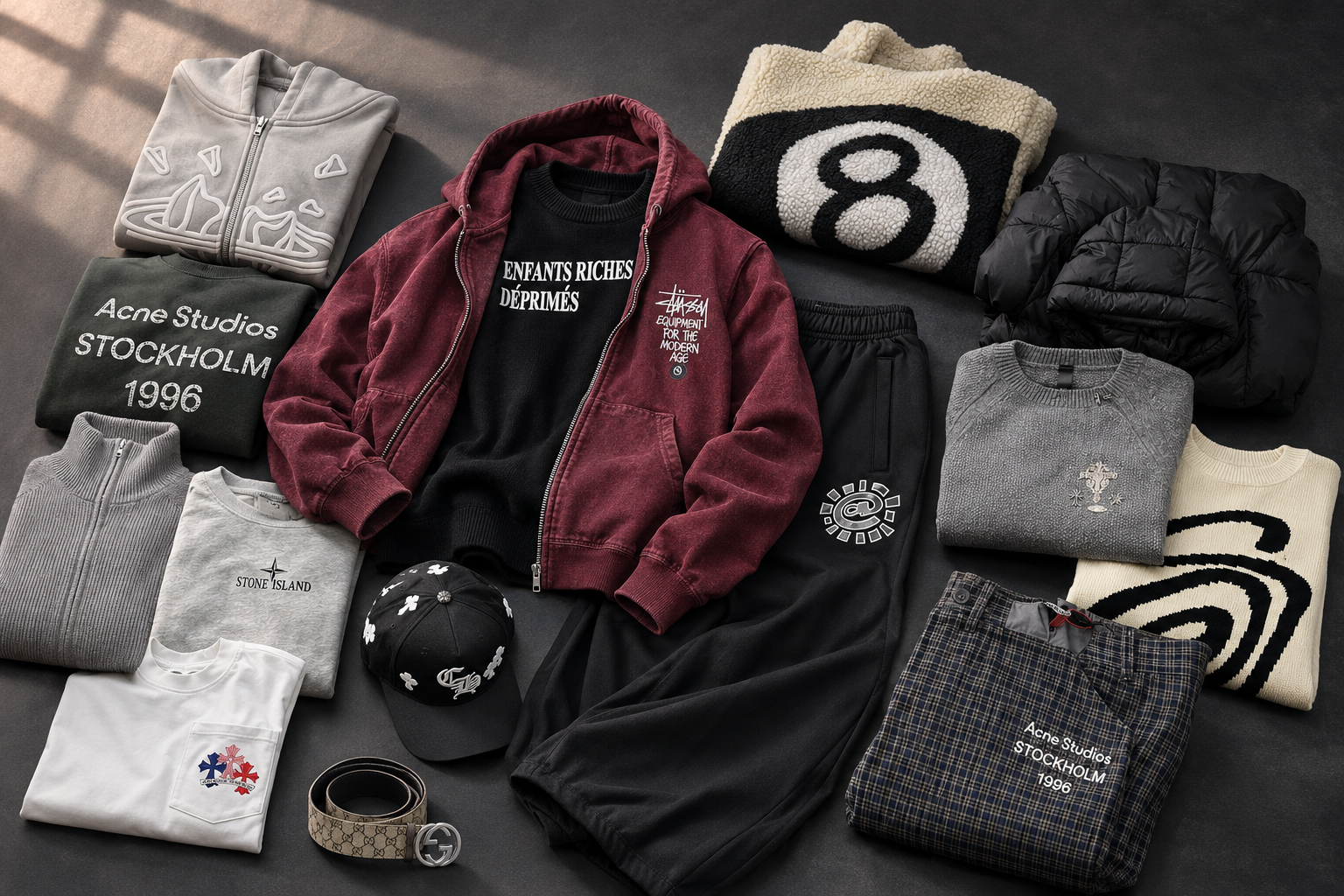
Editor score 4.2 / 5
Reading contents
Start with the Overall Color Palette
This flatlay uses black, gray, white, and off-white as its foundation, with a burgundy hooded jacket serving as the visual centerpiece. The contrast between the cool base and warm focal point creates balance. A black sweatshirt, quilted jacket, pants, and baseball cap anchor the overall palette, while the gray knitwear, turtleneck, and light gray crewneck preserve dimension within the darker combination.

In the arrangement, the burgundy jacket sits at the center, surrounded by black layers and bottoms, making it suitable as the foundation of a complete outfit. Light-colored knitwear, a white long-sleeve top, and an off-white graphic sweater are placed around the edges. They balance the darker areas and keep the composition from feeling too heavy.
Three Color-Palette Ideas
Make Burgundy the Only Accent Color
Pair the burgundy hooded jacket with a black lettered knit sweater, black pants, and black footwear, while keeping the remaining accessories in gray or black. This brings attention to the jacket's color while maintaining a cohesive streetwear feel.
Layer Gray with Black
A gray turtleneck sweater or gray knit cardigan works well between a black jacket, black sweatshirt, and black pants, using differences in brightness to create dimension. If the inner layer features lettering or a graphic, choose relatively simple dark pieces for the outer layers to avoid competing focal points.
Use Off-White to Balance the Dark Combination
An off-white graphic sweater, a black-and-white sherpa bag, and a white long-sleeve top add soft areas of light color to the black and burgundy combination. It is best to keep only one or two main light-colored pieces and continue using black and gray for the other items, creating a cleaner overall look.
Outfit Styling Suggestions
- When using the burgundy jacket as the outer layer, wear the black lettered knit sweater underneath, with black pants connecting the top and footwear.
- Pair the gray turtleneck sweater with the black quilted jacket, letting the gray at the neckline and cuffs show through to add dimension.
- A light gray crewneck with printed lettering can be paired with plaid pants. The plaid bottoms add pattern variation, while the top maintains a low-saturation palette.
- The off-white sweater with a black graphic works well with black pants. Avoid adding too many more complex patterns.
- A black baseball cap, belt, and black-and-white sherpa bag can finish the outfit. They echo the clothing colors without competing with the main pieces.
How to Make a Flatlay Easier to Read
To recreate this type of arrangement, start by placing the largest jackets and pants, then add the knitwear, sweatshirts, and tops, and finish with the hat, belt, and bag. The center is best reserved for the most distinctive piece, while the surrounding items can be arranged from dark to light by color.
It is best not to stack every patterned item in the center. Lettered knitwear, printed tops, plaid pants, and graphic sweaters can be placed in separate areas so the visual features of each piece are easier to see. Natural wrinkles and overlapping items can affect how you judge the fit, fabric weight, and details. This type of flatlay is therefore better suited for color, layering, and display inspiration. It cannot be used to determine size, material, comfort, durability, or authenticity.