Dark Over-Ear Headphones: Design and Headband Details
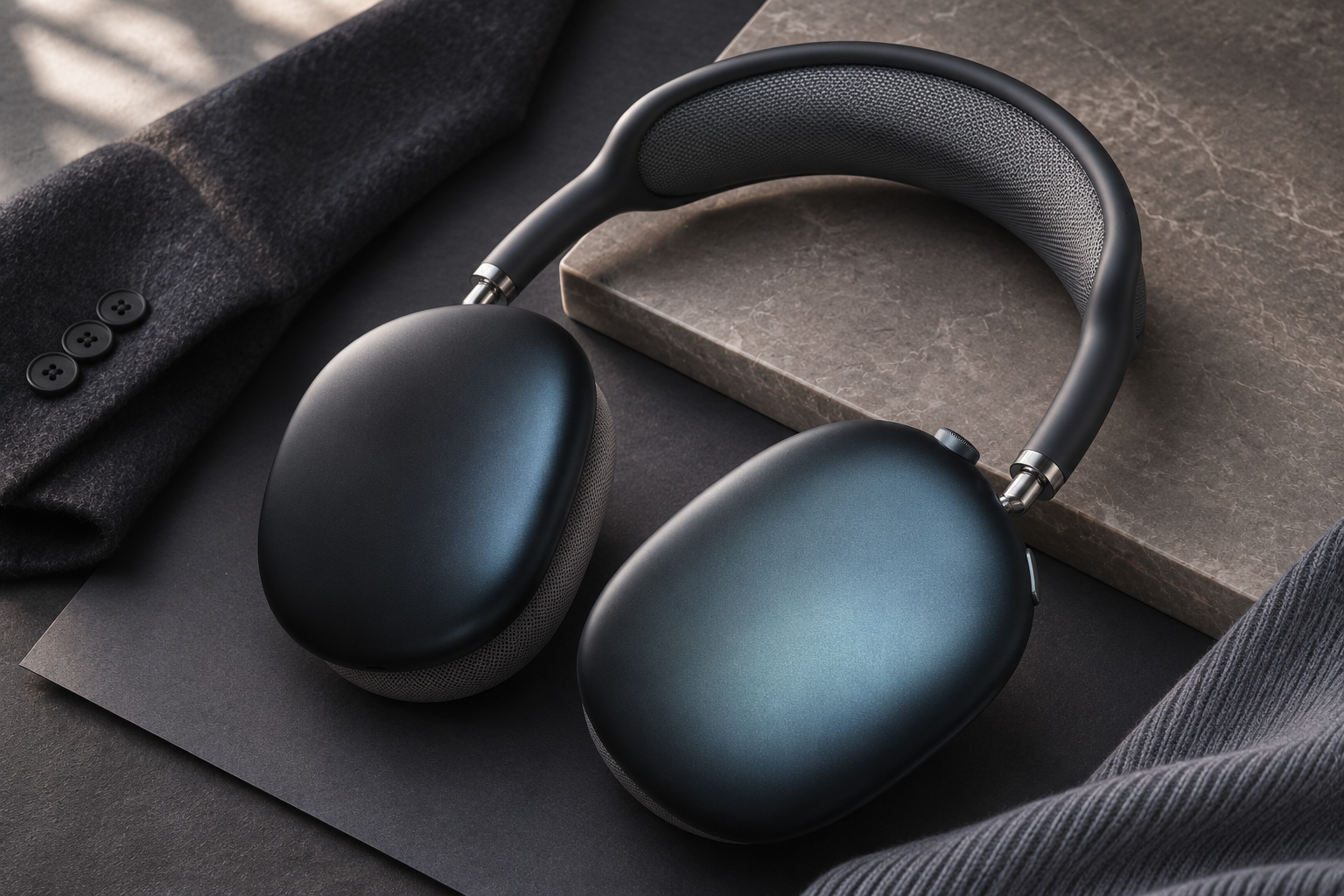
First, Look at the Visual Focus The focus of this composition is not function, but the exterior design, gloss variations, and display atmosphere of dark over-ear headphones. The ear cups are rounded ovals, predominantly dark with metallic connectors along the edges; the headband features a black outer frame and a mesh inner structure, forming a soft curve. The left and right ear cups receive different light—one side darker, the other reflecting a noticeable cool sheen—so it's best to compleme
Editor score 4.2 / 5
Reading contents
First, Look at the Visual Focus
The focus of this composition is not function, but the exterior design, gloss variations, and display atmosphere of dark over-ear headphones. The ear cups are rounded ovals, predominantly dark with metallic connectors along the edges; the headband features a black outer frame and a mesh inner structure, forming a soft curve. The left and right ear cups receive different light—one side darker, the other reflecting a noticeable cool sheen—so it's best to complement them with low-saturation, textured colors.

Color Pairing Suggestions
The safest approach is a combination of dark gray, charcoal, cool gray, and a touch of blue-gray. Placing the dark ear cups on a black or charcoal base maintains overall unity; if you want the ear cup outlines to be clearer, add a light gray or gray-brown rigid board beneath to separate the edges from the background.
Cool highlights pair well with blue-gray, mist gray, or silver-toned small elements. In the image, one ear cup has a cool reflection, so avoid large areas of high-saturation warm colors like orange or bright yellow nearby, as they can weaken the overall sense of calm. If a hint of warmth is needed, use gray-brown stone or dark coffee-colored fabric as a background accent.
Here are three combinations to consider:
- Minimal cool tone: charcoal base, dark gray headphones, light gray packaging board.
- Urban texture: black ear cups, gray-brown stone, deep blue-gray fabric.
- Soft contrast: dark headphones, mist gray background, beige-gray small props.
Display and Composition Methods
The composition uses a diagonal arrangement, letting the headband extend from the top to the ear cups on both sides, naturally guiding the eye to the headphones. Keep a visible arc; don't fully straighten the headband or bury it under the ear cups, as that weakens the structural feel.
The ear cups should be slightly offset or asymmetrical. This shows both sides' different lighting effects and keeps the edges, mesh, and connectors in frame. When shooting from directly above, place the brighter side in the foreground and the darker side behind for depth; to highlight the headband details, let it span the upper part of the frame and leave a clean background for the inner mesh.
Keep props to a minimum. Packaging boards, stone slabs, or folded fabric can serve as accents, but keep them at the edges or behind, avoiding covering the ear cups, adjustable joints, and headband mesh. Rigid boards provide geometric lines, fabrics add soft texture; if using both, keep one element small in area.
Clothing Styling Suggestions
Dark over-ear headphones work well with simple, low-saturation outfits. A black wool coat, charcoal knit, dark blue shirt, or gray hoodie all coordinate with the headphone's dark shell. If including cuffs or fabric in the shot, choose materials with fine texture and natural folds, avoiding large patterns that distract from the headphones.
You can arrange clothing with these ideas:
- Formal workwear: charcoal blazer with a black turtleneck, headphones placed beside the jacket or on a dark desk for a sharper look.
- Casual layers: deep blue-gray hoodie with a black or gray jacket, using the soft fabric texture to balance the hard outline of the headphones.
- Minimal neutral: black top with cool gray trousers, only a small cuff or hem in frame, making the headphones the main visual.
- Slight warmth: dark clothing with a gray-brown background, keeping the main color palette cool while avoiding an overly cold feel.
Trade-offs in Shooting and Styling
If the focus is the ear cup design, let the ear cups occupy the center area with enough negative space to show their full contours. If the focus is the headband structure, increase its proportion in the frame, ensuring the inner mesh and both end connectors are clear and unobstructed.
Lighting-wise, side-top light better reveals the curvature and subtle reflections of the ear cups; even frontal light better shows the overall color. Dark objects need a brightness difference from the background, so you don't need pure black everywhere. Using dark gray, blue-gray, or gray-brown backgrounds usually makes outlines easier to see than a solid black backdrop.
Final styling should meet three criteria: ear cup edges fully visible, headband mesh not swallowed by the background, and clothing/props only adding depth without covering the main subject. As long as these points are clear, dark headphones can present a clean, restrained, and textured image.