Streetwear Flat Lays: Hoodies, Jeans, Color & Display
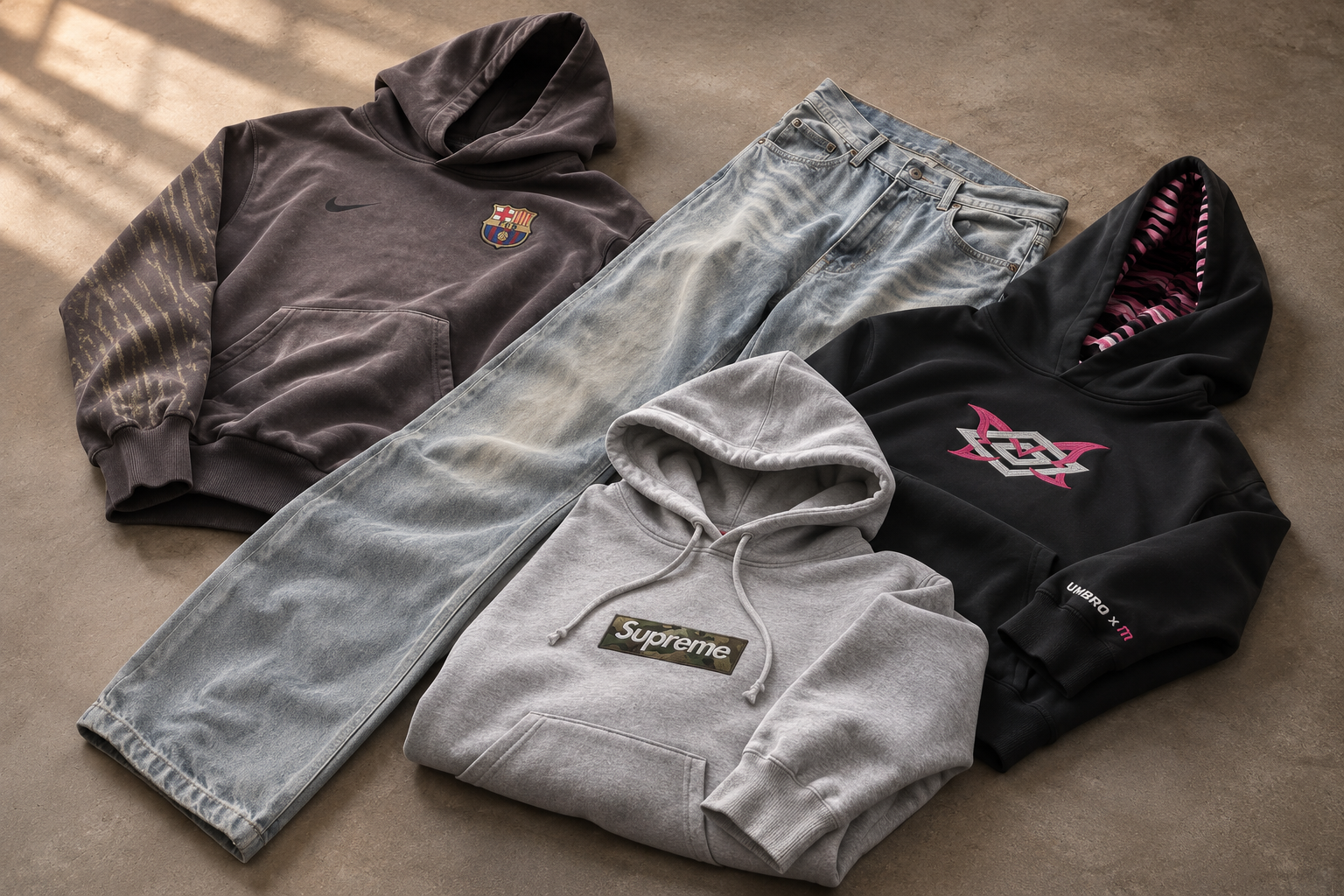
Reading Streetwear Color Palettes from a Set of Flat Lays This set of images features gray-brown, black, light gray, and washed blue as the main colors. The overall palette is low in saturation, which helps create a layered, vintage-inspired streetwear look. The hoodies serve as the visual focal points, while the jeans help differentiate color and texture. 
Editor score 4.2 / 5
Reading contents
Reading Streetwear Color Palettes from a Set of Flat Lays
This set of images features gray-brown, black, light gray, and washed blue as the main colors. The overall palette is low in saturation, which helps create a layered, vintage-inspired streetwear look. The hoodies serve as the visual focal points, while the jeans help differentiate color and texture.
How to Arrange the Color Palette
The gray-brown hoodie sits on the left side of the image. Its tone is deeper than the light gray but softer than black, making it a good transitional color for the overall outfit. The colorful shield graphic on the chest and the striped details on the sleeves provide a small amount of bright color, so the bottoms should not add too many vivid colors.
The black hoodie can serve as a piece with high visual weight. The pink and black striped lining inside the hood and the pink and white graphic on the chest create a clear color focus on the black base. When styling, you can keep pink as a small accent, such as choosing accessories with subtle pink details, but it is not recommended to let bright colors exceed the main garment color.
The light gray hoodie and the light gray washed jeans fall in the same brightness range. To combine them, rely on the wash texture, wrinkles, and garment silhouettes to create distinction. If you want a sharper look, use black footwear or a dark outer layer to anchor the overall brightness. If you prefer a softer casual effect, continue with gray-white accessories.
Layering Methods for Flat Lay Displays
This display does not arrange all items neatly side by side but overlaps them to create a front-to-back relationship: the jeans extend diagonally from the top, the light gray hoodie is in the foreground, and the black hoodie forms a dark boundary on the right. This arrangement allows for showing the body, hood, cuffs, pockets, and pant structure at the same time.
When styling a flat lay, follow this three-step order:
- Place the largest piece, such as bottoms or an outer layer, first to establish the diagonal flow of the image.
- Then place darker hoodies at the edge or in the back to stabilize the visual weight.
- Finally, put lighter-colored items in the foreground and use the brightness contrast to highlight drawstrings, kangaroo pockets, and chest graphics.
If the clothing has many graphics, keep the background low contrast. The brown-gray floor in the current image coordinates with the low-saturation colors of the clothing and does not distract from the logos and embroidery details.
Styling Suggestions
The gray-brown hoodie and washed jeans make the safest combination. The gray-brown softens the cool tone of the jeans, and the light wash of the pants prevents the upper body from looking too heavy. Style with simple white, gray, or dark brown footwear to keep the chest graphic and sleeve texture as the main details.
The black hoodie works well with a black-and-gray contrast. Pair it with light gray washed jeans to make the black top the silhouette focus, or with dark straight-leg pants for a more unified streetwear look. If using pink accessories, keep them to one small accent to avoid competing with the hood lining stripes and chest graphic.
The light gray hoodie is better suited to dark bottoms. Its rectangular letter graphic, white drawstrings, and kangaroo pocket already create clear chest details, so there is no need to add large-scale prints. If wearing it with light-colored jeans, use dark footwear, a belt, or an outer layer to define the silhouette.
What to Look for Before Buying or Styling
Images can help judge color, graphic placement, pocket construction, hood shape, cuff design, and the wash look of jeans, but they cannot confirm material composition, actual measurements, fit, thickness, comfort, durability, care performance, price, stock, authenticity, or specific model.
To further determine if it suits your wardrobe, check actual measurements such as garment length, chest width, shoulder width, sleeve length, waist, inseam, and leg opening, and confirm the fit with the product specifications. For light wash jeans, also pay attention to the hem threads, wrinkle distribution, and overall workmanship to see if they meet your standards.
Summary
The key to styling this set is not complex layering but controlling brightness among low-saturation colors. Gray-brown provides transition, black strengthens the silhouette, light gray brightens the image, and washed blue jeans add cool tones and texture variation. In flat lays, use overlapping to show structure; in outfits, use dark-light contrast to maintain layers, keeping the streetwear and vintage vibe of the image.