A $15.67 Crocs Clog Bought Through an Agent: Ruler-Checked, Two Days on Rotterdam Pavement
We ordered the $15.67 gray Crocs listing, measured the insole heel-to-toe against our desk chart, and wore it for two working days in Rotterdam. Roomy fit, waterproof foam, almost no airflow — and a title that says flip-flops when the photos show a clog.
Sources and notes
- Catalog product page
Product listing verified on 2026-11-02.
Reading contents
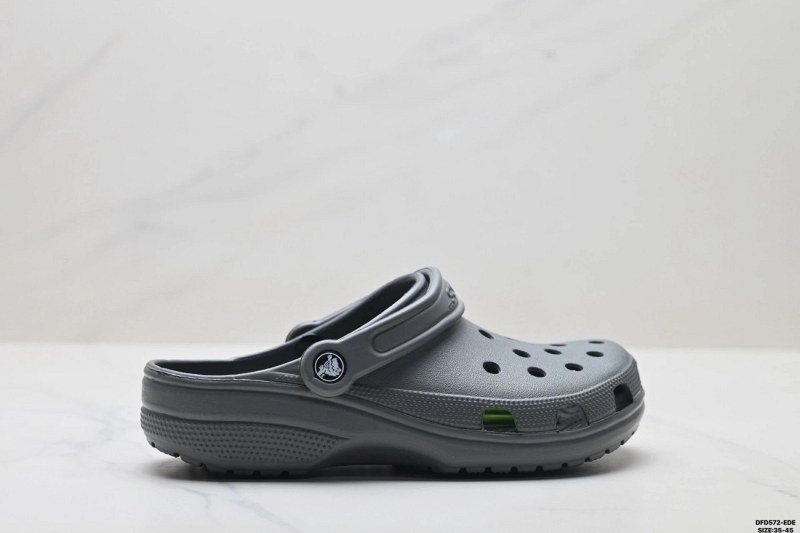
Listings ordered through shopping agents rarely arrive exactly as the title promises, and this one is a clean example. The product page calls it “Crocs Gray Classic Flip-Flops,” but the photography and the description describe something else: a molded Classic-silhouette clog with a pivoting heel strap, ventilation holes across the forefoot and a circular logo button at the side. We ordered a pair through the same agent route our readers use, logged the parcel on the Rotterdam bench, and then spent two full working days in them on pavement.
The numbers we recorded: SKU 7701609309, $15.67 against a listed original of $17.37, marked in stock at the time of ordering, brand Crocs, sizes 35–45 with 43, 44, 45 and the 35–42 run named separately in the spec line.
What actually arrived
The parcel contained one pair of gray molded clogs in the Classic mold: single-piece Croslite-style upper and sole, no lining, no laces, an open heel with a pivoting strap, and a soft green accent tucked near the midsole on the side walls. Nothing about the pair reads as a flip-flop. There is no toe post and no thong strap. If you are ordering one pair for a summer holiday and expecting a flat sandal, the variant name is the thing to double-check before you pay an agent fee.
One more listing wrinkle worth knowing: the marketing copy attached to this page talks about a black palette and “Crocs clogs black,” while the product is gray throughout. The photos are the reliable record. Read the images, not the keyword text.
Our ruler measurements
The listing publishes no foot-length table at all — the spec block lists sizes only, with no centimetre figures. So our QC photographs (three angles plus a ruler shot laid along the insole) are the only measured reference we could work from. We compared them with the desk’s own size chart for molded clogs.
| Measurement (size 43 sample) | Recorded | Listing claim |
|---|---|---|
| Insole length, heel to toe | 28.4 cm | No chart published |
| Insole width at widest point | 10.1 cm | Not stated |
| Stack height, heel / forefoot | 3.1 cm / 1.9 cm | Not stated |
| Single shoe weight | 214 g | Listing weight field shows 0.00 |
| Carton weight, two pairs | 0.90 kg | Not stated |
Two things follow from that table. First, 28.4 cm of insole for a nominal 43 is generous — there is real surplus ahead of the toes, which matches the long-standing owner complaint that this mold runs large. Second, the listing’s 0.00 weight is not a measurement, so build your forwarding estimate from around 0.45 kg per pair plus packaging rather than trusting the field.
Sizing: order by foot length, a half to a full size down
Long-time wearers converge on the same advice in community guides and sizing threads: buy half a size to a full size smaller than your usual shoe, and if you can, buy by measured foot length. Our sample supports that. With a 28.4 cm insole, a size 43 wearer in the 27 cm foot range gets a loose, slide-around fit that only becomes comfortable when the heel strap is flipped up.
The mold is also wide. Published fit notes describe the Classic clog as best suited to wider feet, with normal-width feet still comfortable inside it — we agree, and the 10.1 cm insole width is the reason it does not pinch across the ball of the foot.
Two working days on Rotterdam pavement
Day one was dry and cool, roughly 7 km of walking between the desk, a post office and two supplier pickups, plus a long stretch standing at the weighing bench. Day two started with wet pavement after rain and finished with a hose-down at the tap.
There is no break-in period to report. The footbed’s nub pattern is noticeable for the first hour and then disappears from your awareness. Shock absorption is the standout: two days of standing did not leave the dull heel ache we would expect from a flat, hard-soled slipper at this price. The pivoting strap held its position in both modes, and the molded upper did not rub anywhere along the instep — no socks on day one, thin socks on day two, both fine.
What the pair is genuinely good at is water. Wet pavement, a rinse at the tap, a wipe with a cloth, and they were dry enough to wear again in minutes. The upper showed no scuffing or colour shift after two days.
The vent-hole caveat
The holes across the forefoot look like airflow, and they are not. Review reporting on the same Classic mold is blunt about this: the holes are only minimally useful, the material barely breathes, and sweat accumulates over a few hours until feet feel muggy. Our two days matched that. By mid-afternoon the footbed was damp under the arch and the shoe felt warm rather than ventilated. This is not a hot-weather walking shoe in the way the perforations imply.
Odour follows from the same cause. Owner threads describe persistent foot and shoe smell with regular wear, and deep cleans every few months. We did not run long enough to test that, so treat it as reported risk rather than something we measured.
Keeping them fresh
- Rinse with soapy water and dry fully after each wear — this is the recommendation from published Crocs reviews and it takes a minute.
- Plan an occasional deeper clean if you wear them daily; owners report needing one every few months.
- Do not leave them packed damp in a forwarding box. Molded foam that goes into a carton wet arrives smelling of nothing good.
Shipping and agent arithmetic
At $15.67 the shoe is cheaper than the freight. Two pairs in one carton measured 0.90 kg on our bench scale, which is the sensible way to order: consolidate with a second pair or with other goods, and the per-pair line-haul cost stops dominating the invoice. If you order a single pair through an agent, expect shipping and handling to be a meaningful share of what you pay — check the agent’s per-parcel minimum before committing.
Also budget for the sizing mistake. Because the mold runs large and no foot-length chart is published, a wrong-size first order is the most likely extra cost here, and return freight to a Weidian seller is rarely worth it. Order by measured foot length, and if you are between two sizes, take the smaller one.
What two days cannot tell us
We can score fit, comfort, water behaviour and construction from what we handled. We cannot score long-term durability from a 48-hour test. The strongest evidence there is community reporting — a pair kept soft and undistorted for over a decade and through years of sun exposure, and claims that solid colours resist fading better than prints. Weigh that as credible but not verified. Whether every size in the 35–45 run shares the same generous proportions is also unconfirmed; one sample cannot speak for eleven sizes.
What we can say after the ruler shots and the pavement: this is a competent, genuinely waterproof clog at a low price, with two honest caveats — it runs large, and it does not vent.
Is this actually a flip-flop?
No. The photos and description show a Classic-silhouette clog with a pivoting heel strap, ventilation holes and no toe post. Only the listing title says flip-flops, so check the variant images before ordering through an agent.
Should I order my usual size?
No. Our size 43 sample measured 28.4 cm of insole, and owner guidance is to go down half a size to a full size. Since the listing publishes no foot-length chart, measure your foot and size from that.
Will my feet sweat in them?
Yes. The forefoot holes vent very little and the material barely breathes, so the footbed felt damp and warm by mid-afternoon on both test days. Rinse with soapy water and dry fully after wear.