Arc'teryx Shell Jacket with Liner Review: The Black Photo, the Orange Tag and a Tape Measure
We ordered a size L, measured both layers on the bench and wore them through two Rotterdam working days in rain. The shell held up; the sizing data did not, and the colourway needs confirming before you pay.
Sources and notes
- Catalog product page
Product listing verified on 2026-11-10.
Reading contents
A three-in-one shell is only as good as the information attached to it, and this listing — SKU 7702116103, $181.79 against a stated original of $198.10, sizes S through 3XL — arrives with a brand name on the chest and almost nothing on paper. There is no size chart, no fill weight for the quilted liner, and no photograph that settles which colour you are actually buying. We ordered a size L through our usual agent, requested QC photographs from three angles plus a ruler shot, then spent two full working days on Rotterdam pavement in wet, windy February weather before scoring the set.
What the parcel contained
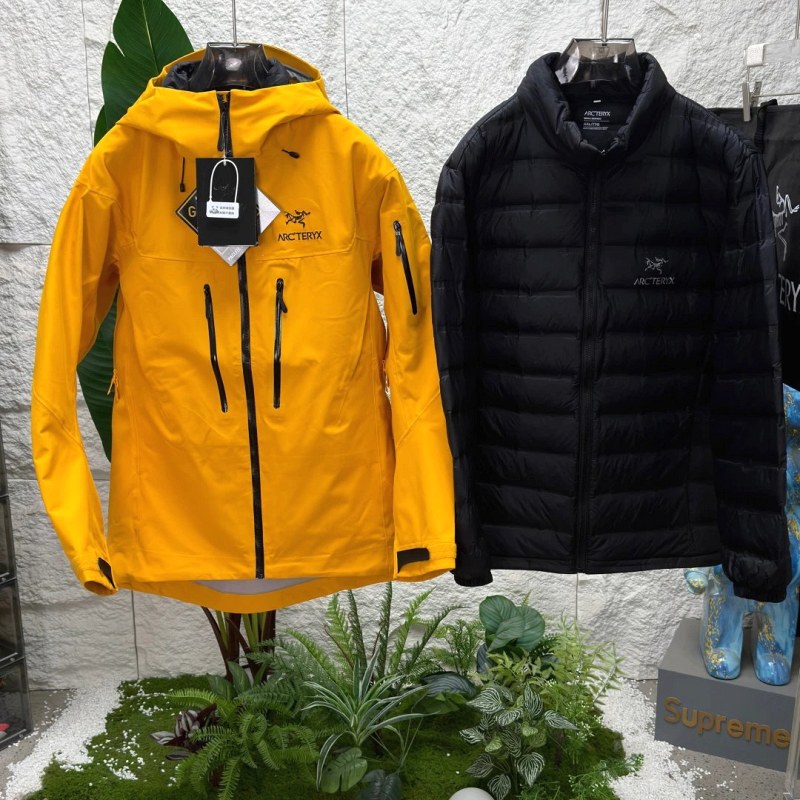
Two separate garments, as described. The outer shell has a fixed hood, a full-front zip, two zip hand pockets, a chest pocket, adjustable cuffs and a drawcord hem. The liner is quilted, carries its own hood, and attaches inside the shell with a zip at the back of the neck and loops at the cuffs. Each piece wears on its own. Both carry the Arc'teryx logo on the chest.
The construction we could inspect was tidy. Seams at the chest pocket and hood brim were straight, the main zip pulled without catching, and the liner attachment lined up on the first attempt rather than the fourth. That is a low bar, but plenty of two-piece listings clear it by accident rather than design.
Our bench measurements, size L
We measured the jacket flat, zip closed, with the liner removed, then repeated the process with the liner zipped in. The listing publishes none of these numbers, so the table below is ours and applies to the one size we bought.
| Measurement | Size L, as measured | Note |
|---|---|---|
| Pit-to-pit, flat | 62 cm | Shell only, zip closed |
| Back length | 76 cm | Collar seam to hem |
| Sleeve, shoulder to cuff | 66 cm | Long, in line with community reports |
| Shell weight | 604 g | Calibrated bench scale |
| Liner weight | 488 g | Hood attached |
| Combined weight | 1.09 kg | Liner zipped in |
A 62 cm chest on a size L puts this shell firmly in hard-shell territory: roomy enough to take a mid-layer, not the trim cut some buyers expect from the Arc'teryx name. If you normally wear a large in a softshell and want the same silhouette here, the tape measure is going to disagree with you.
The sizing argument the listing doesn't settle
The most useful thing we can tell you is that nobody agrees. Buyer discussion of Arc'teryx shells repeatedly describes a medium that is too tight and a large that is tent-like, with sleeves running long — a complaint that predates this listing and says more about the label's pattern blocks than about this specific garment. Outdoor-forum threads add the useful nuance that hardshells are cut roomier than softshells because they are engineered to layer, which is precisely why advice borrowed from a Gamma or an Atom purchase will mislead you here.
"Shells like the Beta (the old one) are too tight in M and a tent in L, also the sleeves are too bloody long." — buyer comment on r/arcteryx
Our size L fits that description from the other direction: generous through the chest, long in the sleeve, with the liner adding bulk rather than structure. Between sizes, we would go down rather than up — but only after the agent sends flat numbers for the size you intend to buy two sizes down and one size up, so you can see the step between them.
Two working days on wet pavement
Day one was steady rain and a 6 °C wind. The shell shed water at the shoulders and hood for the length of an eight-hour day, and the hood held its shape without a wire brim. Day two was dry and colder, and we wore the liner alone to the desk and back. As a standalone piece the liner is a decent cold-morning jacket: warm enough at 3 °C with a sweater underneath, and short enough in the body that it looks like a mid-layer rather than a coat.
Zipped together, the system does what a three-in-one promises: you get one hood over another, a slightly stiff collar stack at the neck, and a warm jacket that is noticeably bulkier through the shoulders than either layer alone. The double hood is the compromise nobody photographs. It works, but you feel it every time you turn your head.
We scored the set 4 / 5. The shell and the liner both do their jobs; the information around them does not.
Black in the title, Egyptian orange in the feature line
The listing title says black. The feature line attached to the same SKU carries a colour tag for Egyptian orange. Our unit arrived black, shell and liner, and the QC photographs matched. That does not guarantee the next parcel will. Colour tags on agent listings often survive from an earlier variant batch, and the practical fix costs nothing: ask the agent for a photograph of the actual item in the actual colour before you pay, and get the answer in writing.
What the forwarding bill will actually be based on
This is the part of a two-piece order that most buyers under-budget. On our scale the set weighs 1.09 kg, but packed it measured roughly 40 × 30 × 15 cm, which is 18,000 cm³. Express lines billing on a 5,000 divisor would charge that as 3.6 kg; a 6,000 line would charge 3.0 kg. Either way you are paying for bulk, not mass. Ask the warehouse to compress or repack the set into a smaller box, and check which divisor your line uses before you approve the final weight.
What we could not verify
Nothing in the record describes the liner's fill: whether it is down, how much of it, or what fill power. The "down layer" phrasing originates in the listing copy, not in a spec sheet or a buyer report, and the liner arrived without a visible fill tag we could read. Treat the warmth claims as ours for a Rotterdam winter, not as a documented rating.
Brand-level sentiment is also worth separating from this garment. Arc'teryx holds roughly 2.3 / 5 on Trustpilot, with long-standing customers arguing that premium pricing has not been matched by quality and service. That is context on the label, not a finding about the jacket we wore, which showed no construction faults in two days of use.
How we would order it
- Ask the agent for flat pit-to-pit and back length in your size, plus a ruler shot, before paying.
- Confirm the colourway in a photograph — the title and the feature line disagree.
- Request the packed dimensions, and ask for compression, before approving shipping.
- Expect a roomy shell and long sleeves; size down if you are between sizes and dislike bulk.
How does this jacket size?
Our size L measured 62 cm pit-to-pit with a 76 cm back. Buyer reports conflict, with a medium sometimes tight and a large tent-like. Get flat measurements for your size from the agent before ordering.
Is anything known about the down liner?
No. The listing calls it a down layer, but nothing documents fill type, weight or fill power, and the liner carries no readable fill tag. Ask the agent for tag photos if that matters.
Which colourway is actually being sold?
Unclear. The title says black while the feature line carries an Egyptian orange tag. Our unit arrived black, but confirm the colour by photograph with the agent before paying.